Most people know they should get their teeth cleaned. Far fewer know what happens in the chair, how often they really need to go, or why the hygienist spends more time scraping some spots than others. So the appointment gets pushed to next month, then the month after, and the plaque keeps doing its quiet work.
This guide clears all of that up. You’ll learn what a professional dental cleaning does that brushing can’t, what each step feels like, how often your mouth actually needs one, and what it costs here in Etobicoke. Where a question deserves its own deep dive, we’ll point you to it.
A professional dental cleaning removes the plaque and hardened tartar that brushing and flossing leave behind, then polishes your teeth smooth. For most people, it takes 30 to 60 minutes, it doesn’t hurt, and it’s recommended about every six months. At Humber Dental in Etobicoke, a gentle hygienist does cleanings paired with a checkup, with evening and Saturday times available. Call (416) 745-4500 to book.
→ Due for a cleaning? Book online in about a minute, or call (416) 745-4500.
KEY TAKEAWAYS Render as a boxed summary list near the top. Good for snippets and skimmers.
| Key Takeaways | At a Glance |
| 1 | A cleaning removes tartar that no toothbrush can shift, which is the whole point of going. |
| 2 | Most people need one every six months; some need one every three to four. |
| 3 | A routine cleaning is quick and comfortable; a deep cleaning is a different, more involved treatment. |
| 4 | Cleanings catch small problems early, when they are cheap and simple to fix. |
| 5 | Cost depends on how much tartar is present and whether X-rays or an exam are included. |
| 6 | Most insurance and the CDCP may cover cleanings for eligible patients, and we bill most plans directly. |
What a Professional Dental Cleaning Actually Does
You brush twice a day, and you floss (most days). So why pay someone to clean teeth you already clean yourself? Fair question, and the answer comes down to one word: tartar.
Plaque is the soft, sticky film of bacteria that builds up on your teeth through the day. Brush it off in time, and you’re fine. If you miss a spot often enough, usually along the gumline and between the back teeth, that plaque hardens into tartar, also called calculus. Once it sets, a toothbrush can’t remove it. It bonds to the tooth like limescale to a kettle, and only a trained hand with the right tools can remove it.
That’s the core of professional teeth cleaning: removing tartar you can’t reach at home, smoothing surfaces so new plaque struggles to cling, and giving your mouth a genuine reset. Everything else a cleaning does well- fresher breath, a brighter surface, an early look at problems- follows from that.
The Benefits of a Dental Cleaning
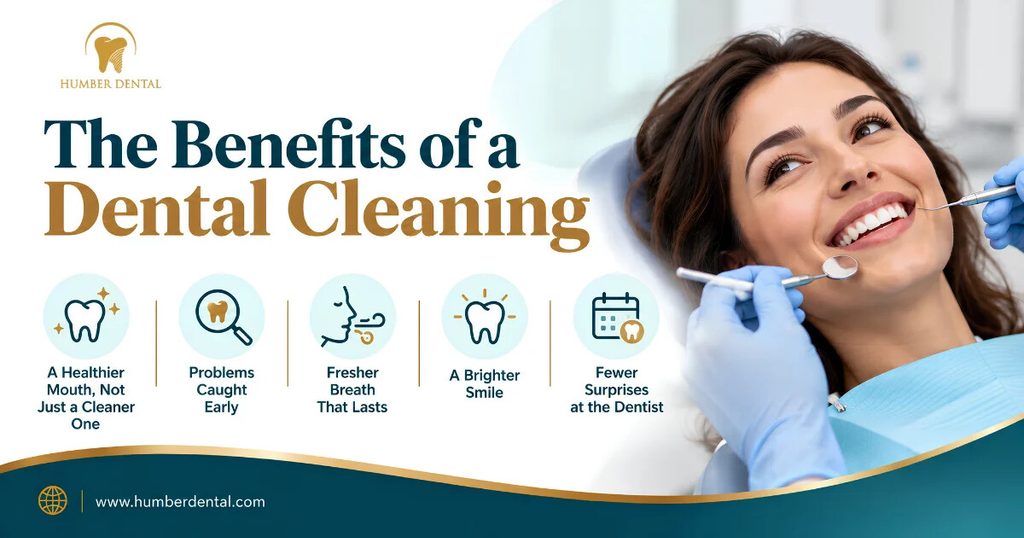
It’s easy to think of a cleaning as a nice-to-have, a bit of polish before a holiday. It’s more than that. Here’s what you’re actually getting.
- A Healthier Mouth, Not Just a Cleaner One: Removing tartar stops the gum inflammation that leads to bleeding gums and, left alone, to gum disease.
- Problems Caught Early: While the hygienist works, your dentist can spot a small cavity or a cracked filling before it becomes painful or expensive.
- Fresher Breath That Lasts: A lot of stubborn bad breath comes from bacteria trapped in tartar. Clear the tartar and the smell often goes with it.
- A Brighter Smile: Polishing lifts surface stains from coffee, tea and red wine, so your teeth look like themselves again.
- Fewer Surprises at the Dentist: People who keep up with cleanings tend to need less drilling later. The dull appointments prevent the dramatic ones.
What Happens During a Dental Cleaning, Step by Step
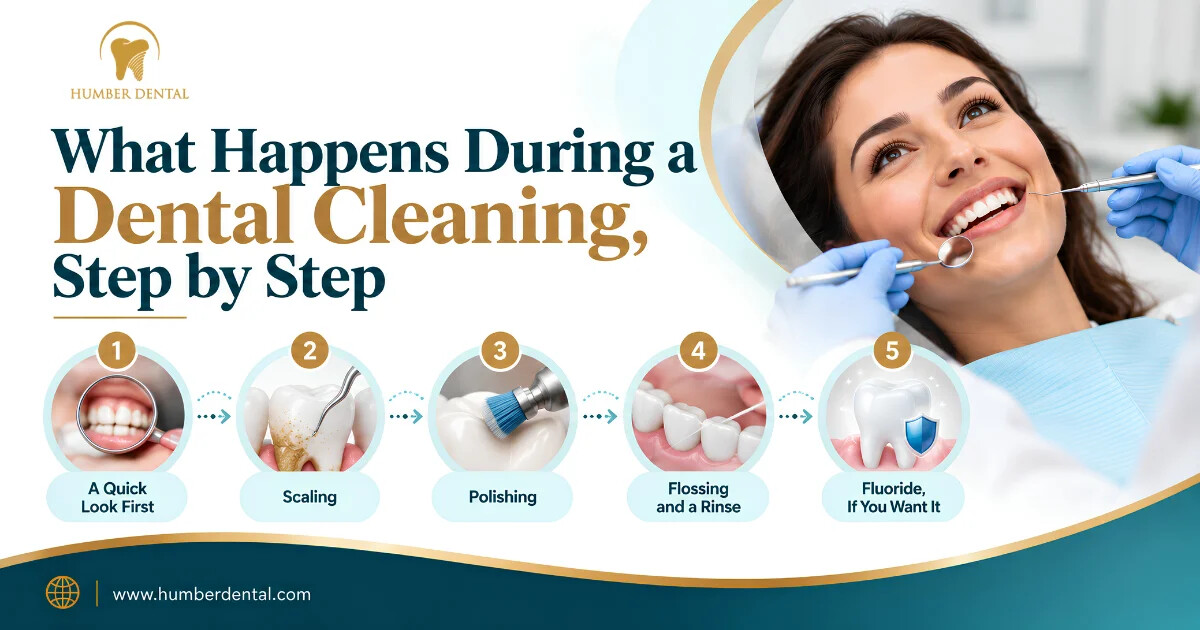
If it’s been a while, the not-knowing is half the worry. Here’s the whole thing, start to finish.
- A Quick Look First: The hygienist checks your teeth and gums, often with a small mirror, to see where the buildup is and how your gums look.
- Scaling: Using a fine hand tool or an ultrasonic scaler, they lift tartar off the teeth and just below the gumline. The ultrasonic one hums and sprays a little water; most people notice that, and it’s pressure, not pain.
- Polishing: A soft spinning cup with a gritty paste buffs the teeth smooth and lifts surface stains. This is what leaves them feeling glassy when you run your tongue over them.
- Flossing and a Rinse: Floss between every tooth to clear anything loosened, then rinse it all away.
- Fluoride, If You Want It: A quick fluoride treatment can strengthen the enamel, especially if you get cavities easily.
→ Book your cleaning and checkup together; call (416) 745-4500.
Does a Dental Cleaning Hurt?
Short answer: for most people, no. A routine cleaning is pressure, scraping and a bit of water, not pain. If your gums are healthy, the worst part is an occasional ticklish moment.
People do feel something when their gums are inflamed, or their teeth are sensitive, so that a cleaning can feel tender in spots. That’s worth knowing rather than dreading, because there’s a lot we can do, from going gently to numbing a sensitive area. We cover what to expect and how we keep you comfortable in a separate article.
How Often Should You Get Your Teeth Cleaned?
The old rule of thumb is every six months, and for many people, that’s exactly right. But it was never meant to be one-size-fits-all. How often you should get dental cleaning depends on your own mouth.
If you build tartar quickly, have gum issues, smoke, or are going through pregnancy or certain health changes, every three to four months serves you better. If your mouth is consistently healthy, you might be able to stretch it a little. The most reliable way to set your schedule is to have a hygienist examine your mouth and tell you what it needs, rather than guessing. We break down how to find your right interval in its own guide.
Dental Cleaning vs Deep Cleaning: Not the Same Thing
People often use these words as if they mean one thing. They don’t, and the difference matters for your time, comfort and cost.
A routine cleaning, the kind this guide mostly covers, keeps your mouth healthy. A deep cleaning, known as scaling and root planing, treats gums that already show signs of disease by cleaning below the gumline and is often done over more than one visit. If a hygienist recommends a deep cleaning, it isn’t an upsell; it means your gums need more than a polish. We lay out the full comparison separately.
Can You Get a Cleaning with Sensitive Teeth?
Yes, and if sensitivity is the reason you’ve been avoiding the chair, this is worth hearing. Sensitive teeth don’t rule out a cleaning. They just mean we adjust how we do it.
That can mean a gentler technique, a desensitising paste, warm rather than cold water, or numbing a particular tooth. Skipping cleanings because of sensitivity usually backfires, since tartar buildup can worsen sensitivity over time. There’s a full guide on getting cleanings comfortably when your teeth are sensitive.
How Much Does a Dental Cleaning Cost in Etobicoke?
There’s no single sticker price, and anyone who quotes you one sight unseen is guessing. The cost of a dental cleaning in Etobicoke depends on how much tartar has built up, whether the visit includes an exam and X-rays, and whether you need a routine cleaning or something more involved.
Ontario dentists follow the Ontario Dental Association Suggested Fee Guide, and we provide a clear written estimate before anything starts. The better news is that cleanings are among the most commonly covered treatments. Most insurance plans cover them; the CDCP may cover eligible services for eligible patients, and we bill most insurance directly so you don’t have to chase reimbursement. There’s a full cost breakdown in its own post.
Does the CDCP Cover Dental Cleaning?
For many Etobicoke families, this question decides whether they book. The Canadian Dental Care Plan may cover eligible services, and routine cleanings are the kind of preventive care it’s designed to help with for eligible patients.
Whether your cleaning is covered depends on your eligibility and the services the plan covers, so it’s worth confirming rather than assuming. Humber Dental welcomes CDCP patients for eligible services, and we’re happy to help you understand what applies before you sit down. There’s a dedicated guide to CDCP and cleanings.
Keeping Tartar Away Between Visits
A cleaning gives you a fresh start. What you do over the next six months decides how much tartar is waiting at the next one.
You can’t remove hardened tartar at home, but you can stop most of it from forming: by brushing for a full two minutes twice a day, flossing to reach where the brush can’t, and cutting back on constant sipping of sugary or acidic drinks. People most often miss the inside of the lower front teeth and the gumline around the back molars. We’ve put together a practical guide to removing tartar and keeping it from building up.
Why Etobicoke Families Choose Humber Dental
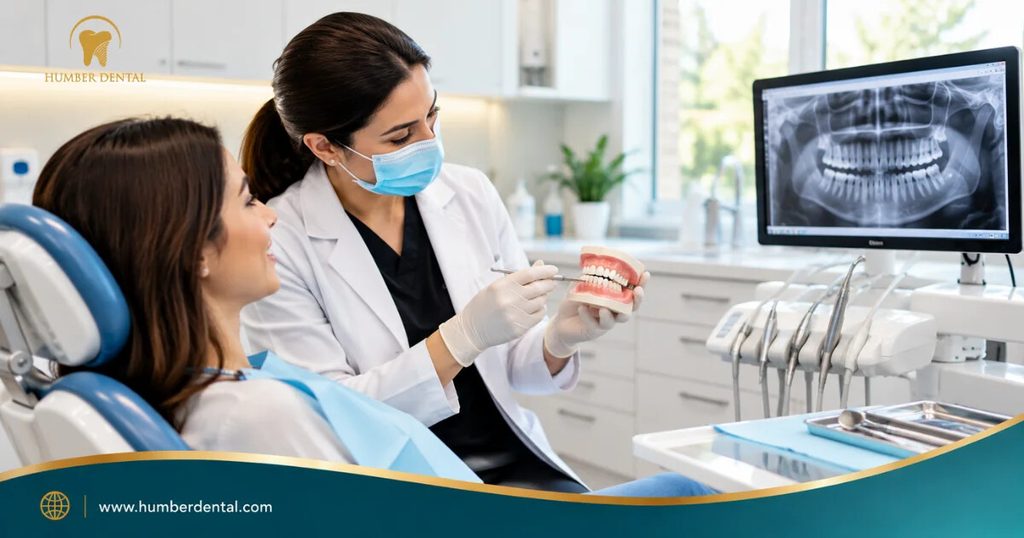
A cleaning is only as good as the hands doing it and the room you do it in. At Humber Dental, cleanings are done by gentle, experienced hygienists, and your checkup is read by a dentist who has looked after Etobicoke mouths for decades. Care is led by Dr Rabin, DDS, a University of Toronto graduate who has practised here since the 1970s.
We’re on Finch Avenue W at Finch and Albion, with free parking, evening and Saturday appointments, and same-day spots when something hurts. More than 450 patients have left us five-star reviews, and we welcome CDCP and IFHP patients for eligible services. If you’re overdue, you won’t get a lecture. You’ll get a clean mouth and a plan.
Book Your Dental Cleaning in Etobicoke
A clean, healthy mouth starts with one easy appointment. Humber Dental offers gentle, thorough cleanings in Etobicoke, with evening and Saturday times, free parking, and direct insurance billing. Whether you’re due for your six-month visit or it’s been a few years, we’ll make it comfortable. Book online, or call or walk in.
Humber Dental | 6100 Finch Avenue W, Unit 205 & 206, Etobicoke, ON M9V 0A1
At Finch & Albion, in the Albion Finch Plaza. Free on-site parking. Call or Walk In: (416) 745-4500 | Book Online
FAQs About Dental Cleaning Etobicoke
Q1. How long does a dental cleaning take?
Most routine cleanings take 30 to 60 minutes, and a little longer if there’s more tartar or it’s been a while since your last visit. Adding a checkup and X-rays usually keeps the whole appointment within an hour. Call (416) 745-4500 and we’ll book a time that fits your day.
Q2. Is a dental cleaning worth it if I brush and floss well?
Yes. Even careful brushing and flossing leave tartar along the gumline and between back teeth, and only a professional can remove it. A cleaning also lets your dentist catch small issues early. Think of it as the part of home care you can’t do yourself. Book online or call to keep yours on track.
Q3. Will a cleaning whiten my teeth?
A cleaning lifts surface stains from coffee, tea, and wine, so teeth often look noticeably brighter afterwards, but it won’t change the tooth’s natural shade the way whitening does. For a brighter result, ask us about whitening at your visit. Call (416) 745-4500 to book.
Q4. Do I still need a cleaning if nothing hurts?
Definitely, Tartar and early gum disease are usually painless, which is exactly why they go unnoticed until they’re advanced. Regular cleanings catch these early, when they’re easy to treat. Pain is a late sign, not an early one. Book a cleaning and stay ahead of it.
Q5. How often should I get my teeth professionally cleaned?
For most people, about every six months, though some do better every three to four months depending on tartar buildup, gum health and lifestyle. A hygienist can set the right interval for you. Call (416) 745-4500 and we’ll recommend a schedule that suits your mouth.
Q6. Does a dental cleaning hurt?
For most people, it doesn’t; a routine cleaning is pressure and scraping, not pain. If your gums are inflamed or your teeth are sensitive, a few spots can feel tender, and we have plenty of ways to keep you comfortable. Tell us you’re nervous and we’ll go gently. Book online or call to get started.