| No, getting a dental implant is usually far less painful than people expect. The placement itself is done under local anesthetic, so you don’t feel pain while it happens, and most patients tell us afterward that it was easier than a tooth extraction. Expect some soreness and swelling for a few days, settled with ice and simple pain relief. Pain that lingers or climbs is uncommon and worth a call. So dental implant pain is real, but it’s short and manageable, not the ordeal the internet makes it sound. |
Let’s be real about why you’re here. You’ve decided an implant might be the answer, and then you made the classic mistake: you read the comments section. Now you’re bracing for agony. The question underneath it all is simple: are dental implants painful? Let’s answer it straight.
Take a breath. After years of placing and restoring implants, here’s what we can tell you: the fear is almost always bigger than the experience. Let’s walk through what actually happens, what you’ll feel, and the risks worth knowing, without sugar-coating any of it.
Are Dental Implants Painful During the Procedure?
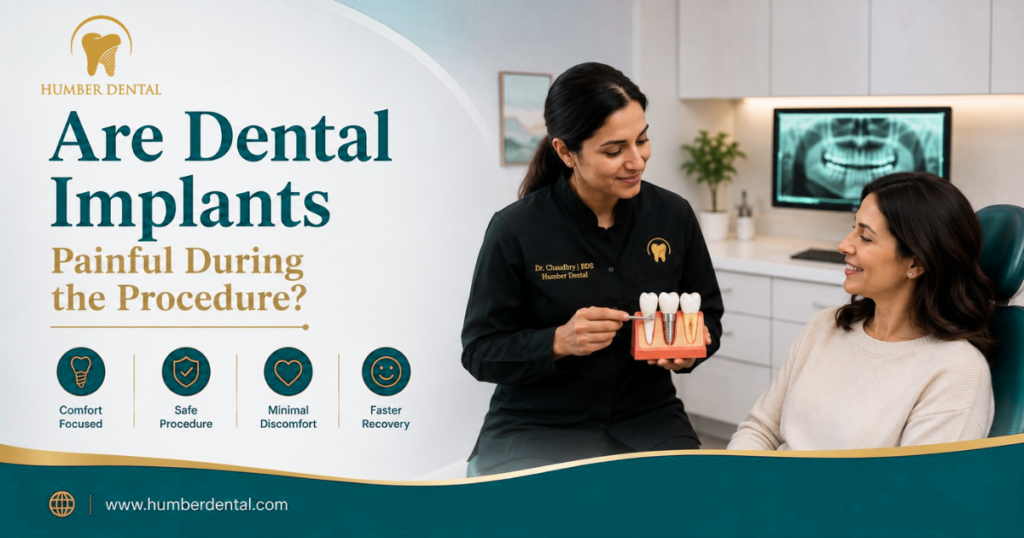
This is the moment people dread, so let’s start here. During placement, the area is completely numb with local anesthetic, the same kind you’ve had for a filling. You feel pressure and movement, not pain. Many patients are surprised it’s over before they’d braced themselves for the worst part.
If you’re an anxious patient, and plenty of lovely people are, sedation options can take the edge off further. Tell us. We would much rather adjust the plan than have you white-knuckling the armrest.
| 🩺 Clinical Note: How it compares to an extraction Most patients describe implant placement as less eventful than a tooth extraction they had years earlier. That surprises people, because “surgery” sounds worse than “pulling a tooth.” In practice, a planned implant placement is precise and controlled, and you are fully numb throughout. If you have managed an extraction, you can manage this. |
The First Few Days, and Your Dental Implant Recovery Time
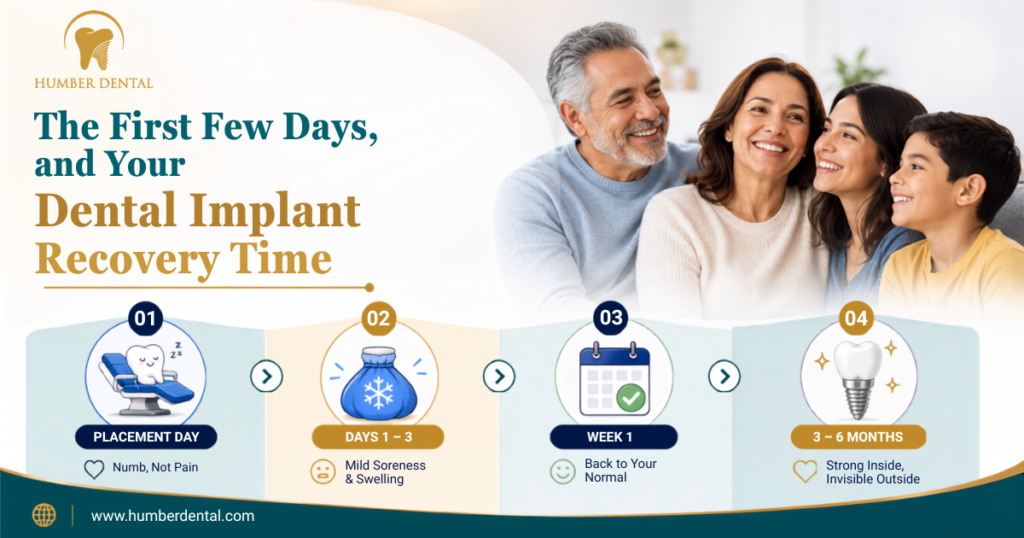
Here’s where the real recovery lives, and it’s shorter than the horror stories suggest. For the first two to three days you can expect some soreness, a bit of swelling, and maybe a little bleeding. Swelling usually peaks around day two or three, then fades. An ice pack and the pain relief we recommend handle it for most people.
The practical stuff matters more than heroics: stick to soft foods for a few days, keep the area clean, rest with your head propped up the first night, and don’t poke at it with your tongue (we know, it’s tempting). Most patients are back at work the next day or the one after. So the active dental implant recovery time you feel is measured in days, not weeks. The longer healing happens quietly under the gum, and you won’t feel that part at all.
The Risks, Told Straight
No procedure is risk-free, and you deserve the real list, not a glossy one. The good news is that implants are one of the more predictable things we do, with long-term success commonly reported around 95 percent or higher. The risks are real but uncommon, and most are preventable:
- Infection At The Site. Uncommon, and usually avoided with clean technique and good aftercare. Treatable if caught early.
- Early Implant Failure. Occasionally, an implant doesn’t fuse with the bone, more likely in smokers or with uncontrolled diabetes. If it happens, the site is left to heal, and the implant can often be replaced.
- Nerve Or Sinus Irritation. Rare, and largely designed out beforehand with 3D imaging that maps exactly where nerves and sinuses sit.
- Gum Inflammation Later On. A gum problem around an older implant, which can be prevented by the same brushing, flossing, and check-ups that protect real teeth.
When Discomfort Is Worth a Call
A little soreness that improves each day is normal. What isn’t: pain that gets worse after the first few days instead of better, swelling that keeps climbing, or an implant that feels loose. None of that means disaster, but it does mean pick up the phone rather than wait it out. We would always rather hear from you early. Our full dental implant recovery guide [Internal link: “Dental Implant Recovery Timeline: What to Expect After Surgery”] walks through the week-by-week process.
Myths About Dental Implants, Cleared Up
A lot of the fear comes from tired myths about dental implants that simply aren’t true. The common ones:
- “Implants Are Agony.” Reality: placement is done numb, and recovery is a few days of manageable soreness for most people.
- “Your Body Will Reject It.” Reality: titanium is biocompatible, which is exactly why it’s used. True rejection is very rare.
- “You’re In Pain For Months.” Reality: the soreness is measured in days. The months-long part is invisible bone healing you don’t feel.
Talk It Through With Us in Etobicoke

If nerves are the only thing standing between you and a fixed smile, let’s take them off the table. Book a consult, and we’ll walk you through exactly what your case involves, pain relief included, with zero pressure. Plenty of our Etobicoke patients who have tooth implants arrive nervous and leave wondering what they were so worried about.
📞 Call: (416) 745-4500
🌐 Online: humberdental.com
📍 Visit: 6100 Finch Ave W, Unit 205 & 206, Etobicoke, ON M9V 0A1
Evening and Saturday appointments available.
FAQs About Dental Implant Pain
Q1. Are dental implants painful?
Not as painful as most people fear. Placement is done under local anesthetic, so you feel pressure rather than pain, and recovery is usually a few days of manageable soreness.
Q2. Does the procedure hurt while it’s happening?
No. The area is fully numb throughout, the same as for a filling. If you’re anxious, sedation options can make it even more relaxed. Just tell us beforehand.
Q3. How long does dental implant pain last?
For most people, noticeable soreness lasts about two to three days and fades from there. Swelling peaks early, then settles. Simple pain relief and an ice pack are usually enough.
Q4. Is recovery worse than a tooth extraction?
Usually not. Many patients say implant recovery felt easier than an extraction they’d had before. The active part is short, and the long healing phase happens quietly with no discomfort.
Q5. What are the real risks of dental implants?
Infection, early failure, and, rarely, nerve or sinus irritation. All are uncommon, most are preventable, and 3D planning plus good aftercare keep the odds firmly in your favour.
Q6. When should I call after implant surgery?
If pain climbs instead of easing after the first few days, if swelling keeps worsening, or if the implant feels loose. Those are worth a prompt call rather than waiting.