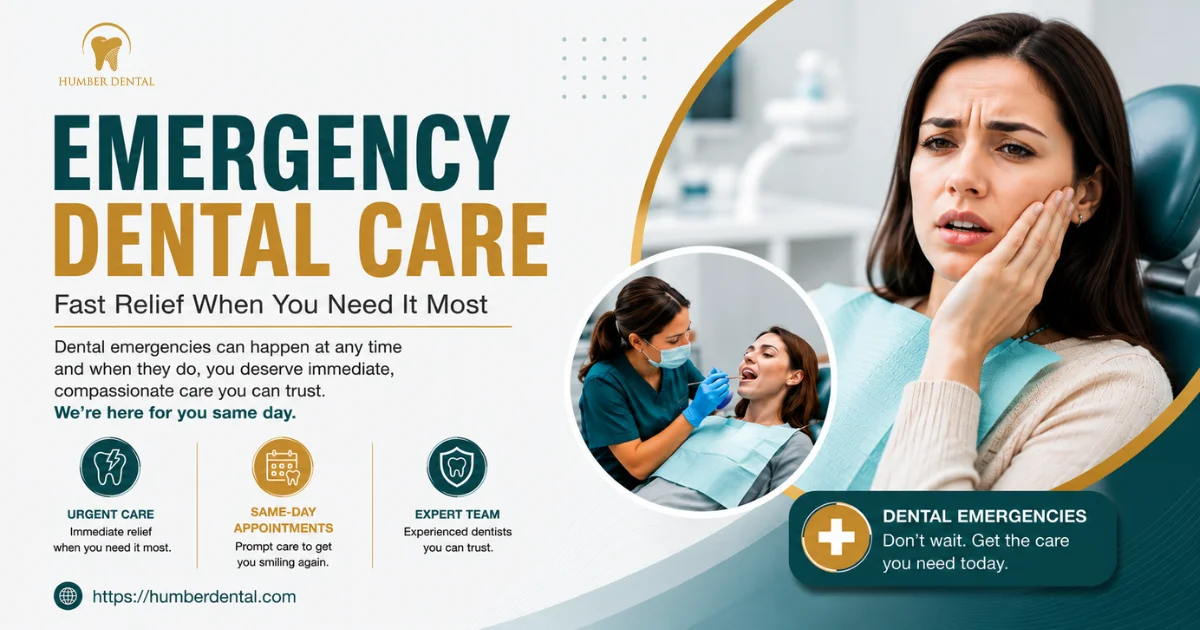
If you’re dealing with sudden tooth pain, swelling, or a broken tooth, you’re likely facing a situation that needs emergency dental care. Waiting too long can turn a manageable issue into a serious problem.
The good news is that most dental emergencies can be treated quickly, especially when you know what to do and where to go.
At Humber Dental, we provide same-day emergency dental care in Etobicoke, helping patients get relief from pain and prevent further damage without unnecessary delays.
What Is Emergency Dental Care?
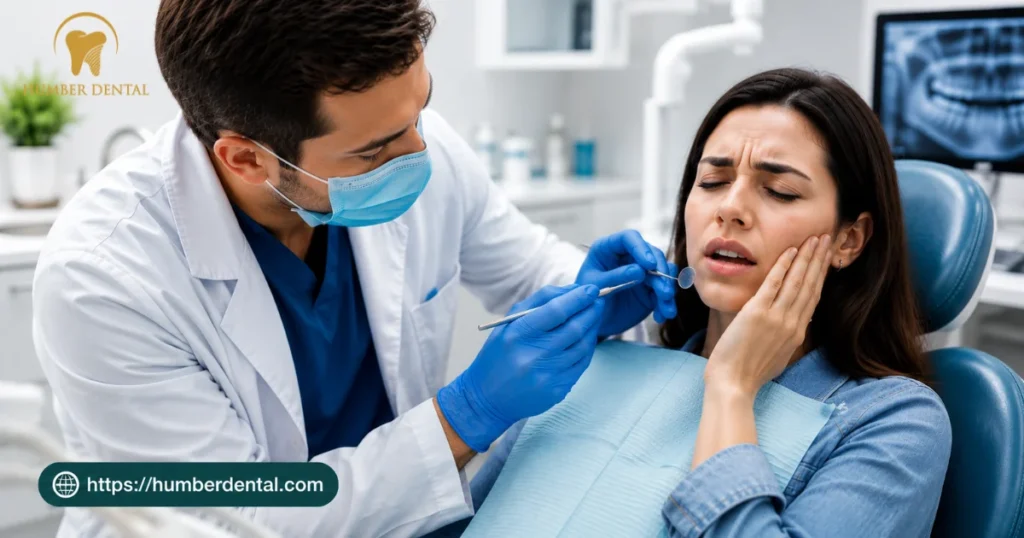
Emergency dental care is immediate treatment for dental problems that cause severe pain, bleeding, infection, or risk of tooth loss.
It focuses on:
- Relieving pain quickly
- Controlling infection
- Saving damaged or knocked-out teeth
- Preventing long-term complications
Not every dental issue is urgent, but when symptoms are severe or worsening, urgent dental care becomes necessary.
5 Signs of a Dental Emergency You Should Not Ignore
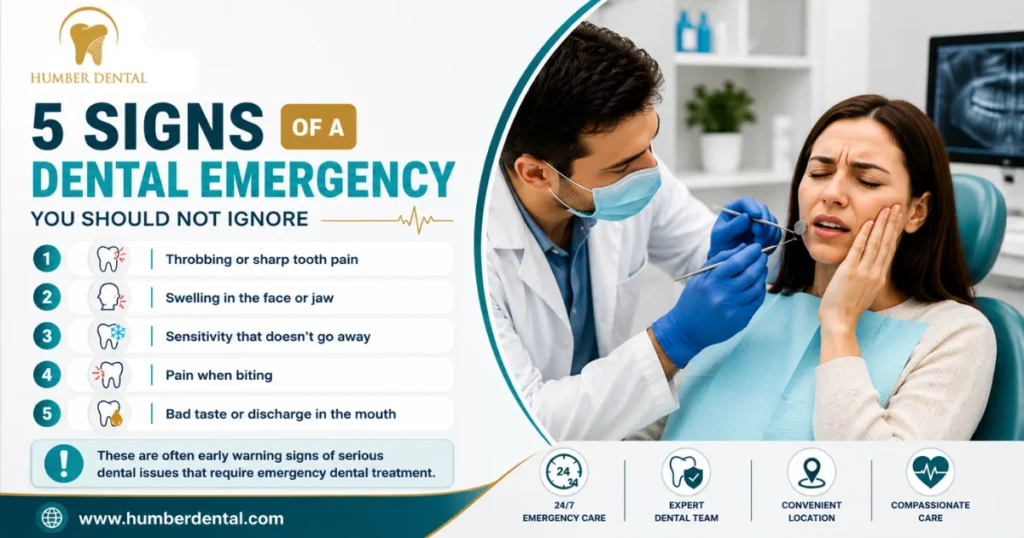
Some symptoms may seem small at first, but they can quickly get worse.
You should seek emergency dental care if your symptoms are severe, worsening, or affecting your ability to eat, speak, or function normally.
Watch for:
- Throbbing or sharp tooth pain
- Swelling in the face or jaw
- Sensitivity that doesn’t go away
- Pain when biting
- Bad taste or discharge in the mouth
These are often early warning signs of serious dental issues that require emergency dental treatment.
6 Common Types of Dental Emergencies
Understanding what kind of dental problem you’re facing helps you act quickly and avoid long-term damage. Some conditions may look minor at first, but can become serious if ignored.
The most common dental emergencies include severe tooth pain, knocked-out teeth, broken teeth, infections, and lost restorations, all of which may require immediate dental attention.
1. Severe Toothache
A strong, continuous toothache is often a sign that something deeper is wrong.
It may be caused by:
- Tooth infection
- Deep decay
- Nerve damage
Pain may feel:
- Throbbing
- Sharp
- Worse at night
If the pain doesn’t go away or keeps getting worse, it usually means the infection is progressing and needs emergency dental treatment.
Early care can prevent the need for more complex procedures later.
2. Knocked-Out Tooth (Dental Avulsion)
This is one of the most urgent dental emergencies.
A knocked-out tooth must be treated within 30 minutes to have the best chance of being saved.
Common causes:
- Falls
- Sports injuries
- Accidents
What makes it critical:
- The tooth can often be reattached if handled correctly
- Delays can lead to permanent tooth loss
Immediate emergency dental care can make the difference between saving and losing the tooth.
3. Broken or Chipped Tooth
Not all broken teeth look serious, but they can still cause damage internally.
It may involve:
- Minor chips
- Deep cracks
- Large fractures
Risks include:
- Exposure of the inner tooth (nerve)
- Pain while chewing
- Increased sensitivity
- Risk of infection
Even if the pain is mild, it’s important to visit an emergency dentist in Etobicoke to prevent further complications.
4. Dental Abscess (Infection)
A dental abscess is a serious condition that should never be ignored.
A dental abscess is a bacterial infection that can spread beyond the tooth and affect surrounding tissues.
Common signs:
- Swelling in the gums or face
- Severe pain
- Pus or bad taste in the mouth
- Fever in some cases
If untreated, the infection can spread to other parts of the body.
This is a situation where urgent dental care is absolutely necessary.
5. Lost Filling or Crown
This may not always feel painful at first, but it leaves your tooth exposed.
What can happen:
- Increased sensitivity
- Difficulty chewing
- Higher risk of damage or decay
Without protection, the tooth can weaken further.
Getting prompt emergency dental care helps protect the tooth and avoid additional treatment.
6. Soft Tissue Injuries (Gums, Lips, Tongue)
Injuries to the soft tissues inside your mouth can also require immediate attention.
These may include:
- Cuts
- Bleeding gums
- Trauma to the lips or tongue
If bleeding does not stop after applying pressure, you should seek emergency dental treatment right away.
Why Early Action Matters
Many dental emergencies get worse over time.
What starts as:
- Mild pain
- Small crack
- Minor swelling
Can turn into:
- Severe infection
- Tooth loss
- Complex procedures
Early emergency dental care helps reduce pain, prevent complications, and increase the chances of saving your natural tooth.
What to Do Immediately During a Dental Emergency (Step-by-Step)
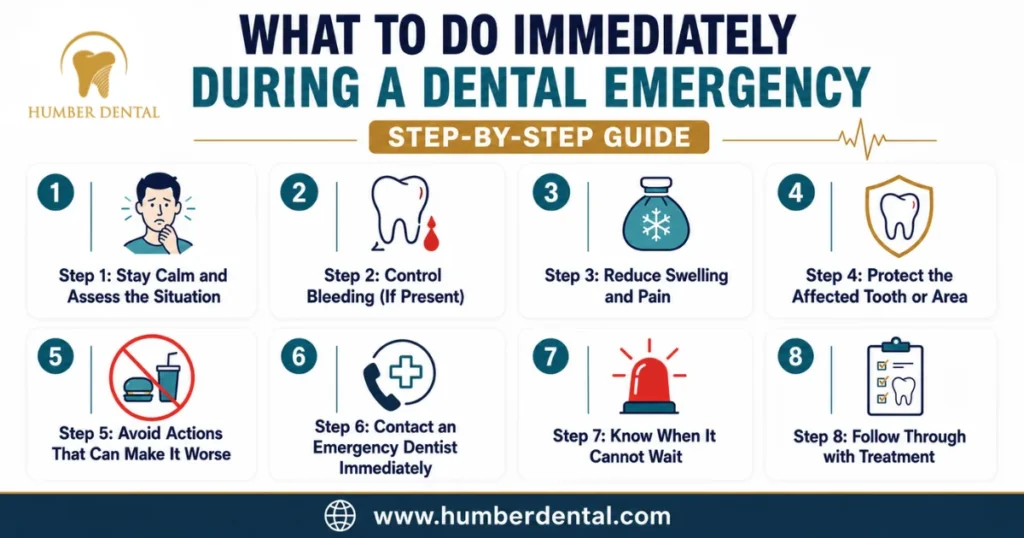
When something goes wrong with your teeth, the first few minutes matter. Staying calm and following the right steps can reduce pain, limit damage, and improve the chances of saving your tooth.
In a dental emergency, protect the area, control bleeding or swelling, manage pain safely, and see an emergency dentist as soon as possible.
Step 1: Stay Calm and Assess the Situation
Panic makes it harder to act correctly.
- Take a moment to identify what happened
- Check for bleeding, swelling, or visible damage
- Note the level of pain and any changes
This helps you decide how urgent the situation is and what to do next.
Step 2: Control Bleeding (If Present)
Bleeding can look alarming, but it is often manageable.
What to do:
- Rinse gently with clean water
- Place a clean gauze or cloth on the area
- Apply firm, steady pressure for 10–15 minutes
If bleeding continues or is heavy, seek emergency dental care immediately.
Step 3: Reduce Swelling and Pain
Swelling is common in many dental emergencies.
What to do:
- Apply a cold compress to the outside of your cheek
- Use it in short intervals (10–15 minutes)
- Avoid placing ice directly on the tooth or gums
For pain:
- Use over-the-counter medication if needed
- Avoid placing medication directly on the gums
This helps manage discomfort until you receive urgent dental care.
Step 4: Protect the Affected Tooth or Area
How you handle the tooth can make a big difference.
If a tooth is broken or chipped:
- Rinse your mouth gently
- Avoid chewing on that side
- Save any broken pieces if possible
If a tooth is knocked out:
- Hold it by the crown (top part)
- Do not touch the root
- Try placing it back gently, or store it in milk
Quick action improves the chances of saving the tooth with emergency dental treatment.
Step 5: Avoid Actions That Can Make It Worse
Many people unintentionally worsen the situation.
Avoid:
- Chewing on the affected side
- Ignoring pain that is getting worse
- Using sharp or hard foods
- Delaying treatment
Small mistakes can turn a manageable issue into a serious problem.
Step 6: Contact an Emergency Dentist Immediately
Once initial care is done, the next step is clear.
After managing the immediate symptoms, you should contact a dentist right away for professional evaluation and treatment.
At Humber Dental, we offer:
- Same-day emergency dental care in Etobicoke
- Evening appointments for urgent cases
- Saturday availability for convenience
Getting professional help quickly ensures proper treatment and prevents complications.
Step 7: Know When It Cannot Wait
Some situations require immediate attention, no delay.
Seek urgent help if you have:
- Severe or worsening pain
- Swelling spreading to the face or jaw
- Difficulty opening your mouth
- Fever or signs of infection
- A knocked-out or severely damaged tooth
These are clear signs that you need emergency dental care in Etobicoke without waiting.
Step 8: Follow Through with Treatment
First aid helps temporarily, but it is not the final solution.
Even if pain reduces:
- The underlying problem may still exist
- Infection may still be present
- Damage may worsen over time
Emergency dental steps provide temporary relief, but professional treatment is necessary to fully resolve the issue.
Why Acting Quickly Makes a Difference
In dental emergencies, time directly affects outcomes.
Acting early can:
- Save your natural tooth
- Reduce pain faster
- Lower treatment costs
- Prevent infection from spreading
Delays often lead to more complex and expensive treatments.
Simple Rule to Remember
If it hurts, swells, bleeds, or feels worse over time – Don’t wait.
Getting the right care at the right time is the safest way to protect your oral health.
If you’re experiencing any of these symptoms, look for same-day emergency dental care in Etobicoke and get the help you need without delay.
6 Important Emergency Dental Treatments Explained
When you visit a dentist during an emergency, the first goal is always the same: to relieve pain and stabilize the problem as quickly as possible.
Emergency dental treatment focuses on diagnosing the issue quickly, reducing pain, and performing the necessary procedure to prevent further damage or infection.
The exact treatment depends on what caused the emergency. Below are the most common treatments you may receive during emergency dental care.
1. Root Canal Treatment (For Infection or Severe Pain)
If your tooth pain is caused by infection or nerve damage, a root canal may be needed.
A root canal removes infected tissue inside the tooth, relieves pain, and helps save your natural tooth.
When it’s needed:
- Severe, continuous tooth pain that does not improve with medication and often gets worse over time
- Infection or swelling in the gums caused by bacteria reaching the inner part of the tooth
- Sensitivity to hot or cold that lingers long after the trigger is removed
What to expect:
- The infected tissue inside the tooth is carefully removed to stop the source of pain
- The inner area is cleaned and sealed to prevent the infection from returning
This is one of the most effective emergency dental treatments for long-term pain relief.
2. Tooth Extraction (When the Tooth Cannot Be Saved)
In some cases, the tooth may be too damaged to repair safely.
Tooth extraction is performed when a tooth is severely broken, infected, or cannot be restored without risking further complications.
When it’s needed:
- Severe structural damage where the tooth cannot support a crown or filling anymore
- Advanced infection that could spread to surrounding teeth or gums if not removed
- Pain that continues despite initial treatments and indicates deeper damage
The focus here is to remove the source of the problem and protect your overall oral health.
3. Dental Bonding or Crown (For Broken or Chipped Teeth)
If your tooth is cracked or chipped, it may still be restored effectively.
Dental bonding or crowns are used to rebuild the shape, strength, and function of a damaged tooth.
When it’s needed:
- A chipped or broken tooth that affects your ability to chew or causes sensitivity
- A weakened tooth that needs additional support to prevent further damage
- Visible damage that affects both function and appearance
These treatments help restore your tooth while maintaining a natural look and feel.
4. Abscess Drainage (For Serious Infection)
An abscess is a serious infection that should never be ignored.
Abscess drainage removes the infection, relieves pressure, and helps prevent it from spreading to other areas.
When it’s needed:
- Swelling in the gums or face that continues to increase over time
- Severe pain combined with a bad taste or discharge in the mouth
- Signs of infection, such as fever or discomfort while chewing
This is a critical part of urgent dental care, as untreated infections can become dangerous.
5. Emergency Filling or Temporary Restoration
If a filling or crown falls out, your tooth becomes exposed and vulnerable.
An emergency filling or temporary restoration protects the tooth and reduces sensitivity until permanent treatment is completed.
When it’s needed:
- A lost filling that leaves the tooth surface exposed to food and bacteria
- A missing crown that affects chewing and increases the risk of further damage
- Sudden sensitivity when eating or drinking due to exposure
This step helps stabilize the tooth and prevent further complications.
6. Re-implantation of a Knocked-Out Tooth
This is one of the most time-sensitive dental procedures.
A knocked-out tooth can sometimes be placed back into the socket if treated quickly—ideally within 30 minutes.
When it’s possible:
- The tooth is intact and has been handled carefully without touching the root
- It has been kept moist in milk or saliva after the injury
- You reach an emergency dentist in Etobicoke as quickly as possible
Immediate emergency dental care significantly improves the chances of saving the tooth.
What Happens First During Emergency Treatment
No matter the condition, the dentist follows a clear and structured approach.
Emergency dental care always begins with pain relief, followed by diagnosis and immediate treatment to stabilize the situation.
This usually includes:
- A quick but thorough examination to identify the exact problem
- X-,rays if needed to understand internal damage or infection
- Immediate steps to relieve pain and reduce discomfort
- A treatment plan to fix the issue or prevent it from getting worse
Will Emergency Dental Treatment Be Painful?
This is one of the most common concerns patients have.
Emergency dental treatment is designed to relieve pain, not cause it, and modern techniques make procedures comfortable and manageable.
Choose a dental practice where patient comfort is always a priority, especially during urgent situations.
Emergency Dentist Cost in Etobicoke
Cost is one of the first concerns during a dental emergency. The good news is that most treatments are predictable, transparent, and explained before you proceed.
The cost of emergency dental care in Etobicoke depends on the type of treatment needed, starting from a basic exam and increasing based on the complexity of the procedure.
What Does an Emergency Dental Visit Cost?
The first step is usually an emergency exam.
An emergency dental visit in Etobicoke typically costs between $100 to $400 for the initial consultation, including examination and basic X-rays.
This visit helps:
- Identify the exact problem
- Understand the severity
- Plan the right treatment
In some clinics, the assessment alone may be capped at $175–$225, depending on the diagnostics required.
Cost of Common Emergency Dental Treatments
Once the issue is diagnosed, the total cost depends on the treatment required.
Here’s a realistic breakdown of emergency dental treatment costs in Ontario:
- Tooth Extraction:
Usually, it ranges from $180 to $700, depending on how complex the removal is - Dental Filling (for broken or decayed tooth):
Typically costs $150 to $500, based on material and severity - Root Canal Treatment:
Can range from $800 to $2,100, depending on the tooth and infection level - Dental Crown (to resta ore damaged tooth):
Usually falls between $1,000 to $1,900 - Abscess Treatment (infection control):
Often starts around $200 or more, depending on severity
Why Emergency Dental Costs Vary
Not every emergency is the same.
Emergency dental costs vary based on the type of problem, treatment complexity, and timing of the visit.
Factors that affect pricing include:
- The severity of the condition the and number of teeth involved
- Type of treatment required (simple vs complex)
- Need for X-rays or additional diagnostics
- Materials used (fillings, crowns, etc.)
- After-hours, evening, or weekend appointments
For example, more complex procedures like root canals or crowns cost more than basic fillings or exams.
Does Insurance Cover Emergency Dental Care?
This is a key concern for most patients.
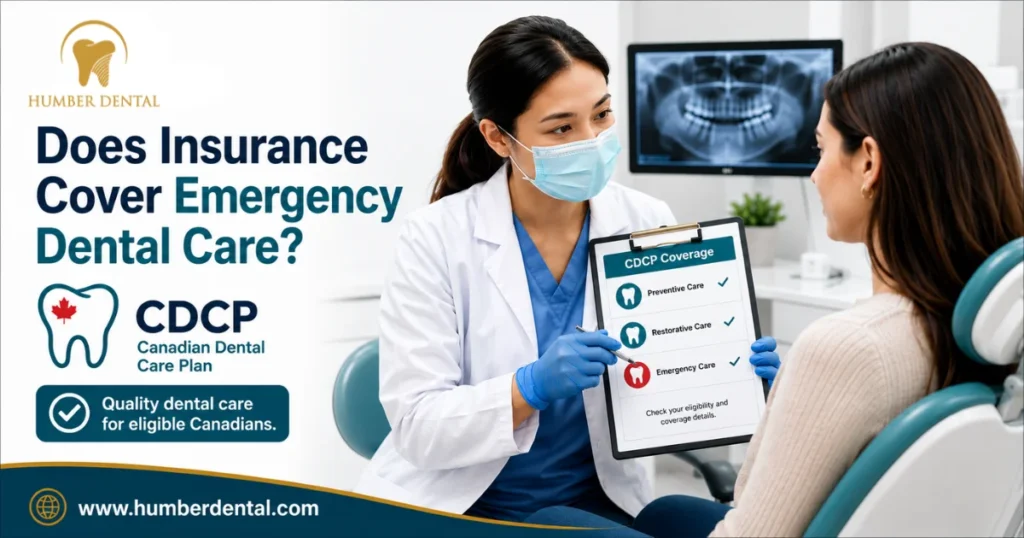
Most dental insurance plans in Canada cover a portion of emergency dental care, especially for medically necessary treatments.
Coverage may include:
- Emergency exam and X-rays
- Fillings, extractions, and root canals
- Infection-related treatments
Additionally:
- The Canadian Dental Care Plan (CDCP) may cover part of urgent treatments for eligible patients
However, coverage depends on your plan limits and eligibility.
Are Emergency Dental Visits More Expensive at Night or Weekends?
Many patients delay treatment because of this concern.
Emergency dental visits outside regular hours may include an additional fee, but getting treated early often prevents more expensive procedures later.
In many cases:
- After-hours care may add $50 to $200 extra
- Delaying treatment can lead to higher overall costs
Treating the issue early is often the more cost-effective decision.
How to Manage Emergency Dental Costs
Dental emergencies are unexpected, but there are ways to manage them.
- Ask for a clear treatment estimate before proceeding
- Use insurance benefits where available
- Consider phased treatment if appropriate
- Address problems early to avoid higher costs later
At Humber Dental, we always explain:
- What the issue is
- What treatment is needed
- What it will cost
So you can make an informed decision.
If you’re in pain, cost should not be the reason to delay treatment.
Emergency dental care is often more affordable when treated early, and delaying treatment usually increases both complexity and cost.
The Takeaway
- Initial visit: usually $100–$400
- Treatment cost: depends on the problem
- Insurance: may cover part of it
- Early action: saves money and prevents complications
If you’re experiencing pain, swelling, or injury, the safest approach is to get it checked immediately.
Look for a dental office in Etobicoke that offers same-day emergency dental care, with clear pricing and flexible appointment options, so you can get relief without delay.
Same-Day Emergency Dentist in Etobicoke (Availability & Access)
When you’re in pain, the biggest question is simple:
“Can I get treated today?”
The answer, in most cases, is yes, if you act quickly.
Same-day emergency dental care in Etobicoke is widely available, with many clinics reserving daily slots specifically for urgent cases so patients can receive treatment without long delays.
Why Same-Day Care Matters
Dental emergencies don’t wait, and neither should you.
Delaying even a few hours can:
- Increase pain and discomfort
- Allow infection to spread
- Turn a simple issue into a complex treatment
Getting same-day emergency dental care reduces complications, improves treatment outcomes, and often helps save your natural tooth.
What “Same-Day Emergency Dentist” Actually Means
It doesn’t just mean you’ll be seen; it means prioritized care.
Most emergency dental clinics in Etobicoke:
- Keep time slots open specifically for urgent patients
- Provide quick diagnosis and pain relief
- Begin treatment immediately or stabilize the condition
Dental offices like Humber Dental offer urgent dental services with short wait times and extended hours, helping patients get treated quickly when it matters most.
Availability Beyond Regular Hours
Emergencies rarely happen at convenient times.
That’s why many clinics in Etobicoke offer:
- Evening appointments for after-work visits
- Saturday availability for families and busy professionals
- Extended hours in some clinics, sometimes up to late evening
Some dental offices provide extended weekday and weekend hours, making it easier to access urgent care without disrupting your routine.
Walk-In and Immediate Care Options
Not every emergency requires a prior booking.
Some clinics allow walk-ins or same-day scheduling, such as Humber Dental, where patients can visit for urgent dental issues without waiting days for an appointment.
Walk-in and same-day emergency dental services in Etobicoke ensure that patients can receive care quickly, even without prior scheduling.
Who Benefits Most from Flexible Emergency Care
Same-day and extended-hour care is especially helpful for:
- Working professionals who cannot visit during regular hours
- Parents managing dental emergencies for children
- Seniors who may need immediate attention
- Patients experiencing sudden pain or trauma
Flexible scheduling ensures that urgent dental care is accessible when you need it, not just when it’s convenient.
What Happens When You Call an Emergency Dentist
The process is usually quick and simple:
- Your symptoms are assessed over the phone
- You are given immediate guidance
- A same-day appointment is scheduled if needed
Many clinics prioritize emergency calls and guide you on what to do before arriving.
Why Quick Access Makes a Real Difference
Getting help the same day can:
- Stop pain faster
- Prevent infection from spreading
- Reduce the need for complex procedures
- Improve the chances of saving your tooth
The faster you access emergency dental care, the better the outcome for both your health and your treatment cost.
If you’re experiencing pain, swelling, or injury, you don’t need to wait days for care.
Same-day, evening, and weekend availability across Etobicoke means you can get treated quickly and safely, often within hours.
Simple Takeaway
- Same-day emergency appointments are commonly available
- Evening and Saturday options make care more accessible
- Acting quickly improves outcomes and reduces complications
If you’re dealing with a dental emergency, the most important step is to reach out immediately.
Humber Dental offers same-day emergency dental care in Etobicoke, with flexible appointments designed to help you get relief without delay.
What to Expect During an Emergency Dentist Visit
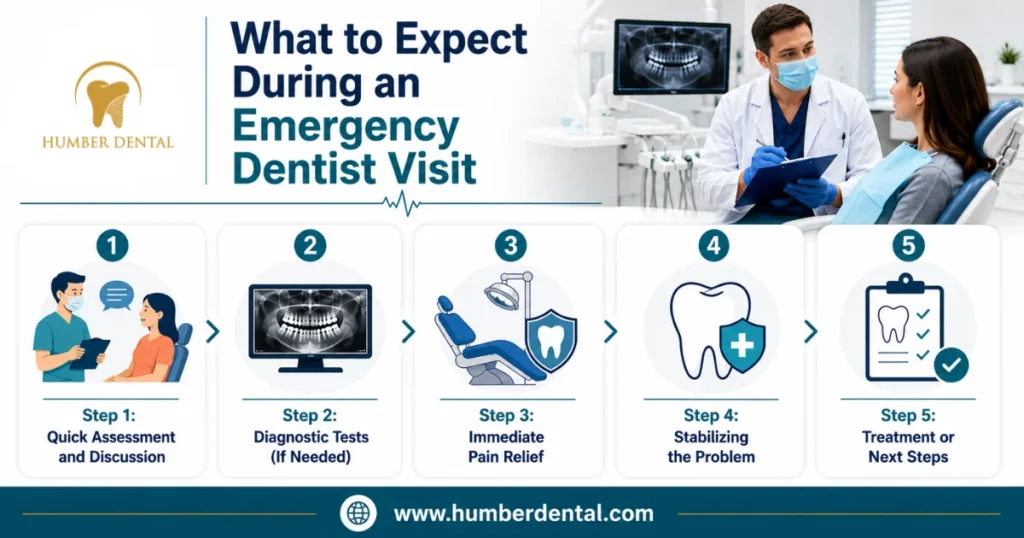
If you’ve never had a dental emergency before, it’s natural to feel unsure about what will happen during your visit.
The good news is that emergency dental care is designed to be quick, focused, and comfortable, with the main goal of relieving pain and stabilizing the problem.
An emergency dentist visit includes a quick examination, diagnosis of the issue, immediate pain relief, and the necessary treatment to stabilize your condition.
Step 1: Quick Assessment and Discussion
When you arrive, the dentist will first understand what you’re experiencing.
This includes:
- Asking about your symptoms and when they started
- Checking the affected area
- Identifying visible damage or swelling
This step helps determine how urgent the situation is.
Step 2: Diagnostic Tests (If Needed)
In some cases, the problem may not be visible on the surface.
To get a clear picture, the dentist may:
- Take X-rays to check internal damage
- Assess infection or nerve involvement
- Identify the exact cause of pain
This ensures that the right emergency dental treatment is provided.
Step 3: Immediate Pain Relief
Relieving pain is always the first priority.
Emergency dental care focuses on reducing pain as quickly as possible before moving to further treatment.
This may include:
- Local anesthesia to numb the area
- Temporary solutions to reduce sensitivity
- Initial steps to control infection
Most patients feel significant relief during or immediately after this step.
Step 4: Stabilizing the Problem
Once pain is managed, the dentist will take steps to prevent the issue from getting worse.
This could involve:
- Placing a temporary filling or crown
- Securing a damaged tooth
- Draining an abscess
- Protecting exposed areas
The goal is to stabilize your condition quickly.
Step 5: Treatment or Next Steps
Depending on the situation, treatment may be completed immediately or planned in stages.
Some emergency dental treatments are completed in one visit, while others may require follow-up appointments for full restoration.
You will be clearly informed about:
- What has been done
- What needs to be done next
- How to take care of the area
Will the Visit Be Painful?
This is one of the most common concerns.
Emergency dentist visits are designed to relieve pain, and modern techniques make treatments comfortable and manageable.
At Humber Dental, patient comfort is always a priority, especially during urgent care.
How Long Does an Emergency Visit Take?
Time depends on the situation.
Most visits:
- Take between 30 to 90 minutes
- Focus on immediate relief and stabilization
More complex treatments may take longer or require additional visits.
Why Knowing This Helps
Understanding the process reduces anxiety and helps you act faster.
Instead of delaying care due to uncertainty, you know:
- What will happen
- How it will feel
- What results to expect
If you’re dealing with pain or injury, an emergency dental visit is not something to fear—it’s a step toward relief.
With same-day emergency dental care in Etobicoke, you can get treated quickly, comfortably, and with clarity at every step.
Why Choose Humber Dental for Emergency Dental Care
When you’re in pain, you don’t just need a dentist, you need a team that can act quickly, explain clearly, and make you feel at ease.
At Humber Dental, our focus is simple: fast relief, clear answers, and care you can trust.
Humber Dental provides same-day emergency dental care in Etobicoke, with a patient-first approach that prioritizes pain relief, accurate diagnosis, and comfortable treatment.
What Makes Our Emergency Care Different
Same-Day Appointments for Urgent Cases
We reserve time each day for emergencies, so you can be seen quickly without long waiting periods. This helps address pain early and prevents complications from getting worse.
Evening and Saturday Availability
Dental emergencies don’t follow a schedule. That’s why we offer flexible appointments, including evenings and Saturdays, making it easier for working professionals and families to get care when they need it.
Focused on Immediate Pain Relief
When you walk in with pain, that becomes our priority.
We take steps to reduce discomfort quickly before moving to further treatment, so you feel relief as soon as possible.
Clear, Honest Treatment Guidance
You’ll always know what’s happening and why.
We explain:
- What the problem is
- What treatment is needed
- What your options are
So you can make confident decisions about your care.
Modern Technology for Accurate Diagnosis
Using digital X-rays and precise diagnostic tools, we quickly identify the root cause of the problem and plan the right emergency dental treatment.
Comfortable and Calm Environment
Dental emergencies can feel stressful. Our approach is calm, supportive, and focused on making you feel comfortable throughout the visit.
Care for Patients Across Etobicoke and Nearby Areas
We regularly help patients from:
- Etobicoke
- Rexdale
- Woodbridge
- North York
If you’re searching for an emergency dentist near me, Humber Dental offers reliable and accessible care close to home.
Why Acting Early Matters
Choosing the right clinic, and acting quickly, can:
- Save your natural tooth
- Reduce treatment complexity
- Lower overall costs
- Prevent infection from spreading
Getting emergency dental care at the right time and from the right team makes a significant difference in both your recovery and long-term oral health.
What This Means for You
If you’re experiencing pain, swelling, or injury, you don’t have to wait or worry about what to do next.
With same-day emergency dental care in Etobicoke, Humber Dental is here to help you get relief quickly and safely.
If you need urgent care, the best time to act is now.
Call Humber Dental to book your same-day emergency appointment and get the care you need without delay.
FAQs – Emergency Dental Care in Etobicoke
Q1. What is considered a dental emergency?
A dental emergency includes severe tooth pain, swelling, bleeding, or a broken or knocked-out tooth that needs immediate attention. Emergency dental care in Etobicoke helps treat these issues quickly and prevent further complications.
Q2. When should I see an emergency dentist in Etobicoke?
You should see an emergency dentist in Etobicoke immediately if pain is severe, swelling increases, or there is risk of infection or tooth loss. Early emergency dental care helps reduce pain and avoid more complex treatment.
Q3. Can I wait before getting emergency dental care?
No, delaying emergency dental care can make the problem worse and increase treatment complexity. Visiting an emergency dentist in Etobicoke early helps prevent infection, reduce pain, and improve the chances of saving your tooth.
Q4. What should I do during a dental emergency at home?
During a dental emergency, rinse your mouth, control bleeding, use a cold compress, and avoid chewing on the affected side. These emergency dental care steps help manage symptoms until you see an emergency dentist in Etobicoke.
Q5. How much does emergency dental care cost in Etobicoke?
Emergency dental care cost in Etobicoke depends on the treatment needed, such as fillings, extractions, or root canals. A visit to an emergency dentist in Etobicoke helps determine the exact cost based on your condition.
Q6. Do emergency dentists offer same-day appointments in Etobicoke?
Yes, many clinics offer same-day emergency dental care in Etobicoke for urgent cases. Humber Dental provides same-day dentist appointments so patients can get relief quickly without waiting for days.
Q7. Is tooth pain always a dental emergency?
Tooth pain becomes a dental emergency when it is severe, persistent, or associated with swelling or infection. Emergency dental care in Etobicoke helps identify the cause and provide immediate treatment.
Q8. Can a knocked-out tooth be saved?
Yes, a knocked-out tooth can often be saved if you receive emergency dental care within 30 minutes. Visiting an emergency dentist in Etobicoke quickly increases the chances of successful re-implantation.
Q9. Do I need emergency dental care for a chipped or broken tooth?
Yes, emergency dental care is recommended for a chipped or broken tooth to prevent further damage or infection. An emergency dentist in Etobicoke can restore the tooth and protect it from complications.
Q10. Are emergency dental visits painful?
Emergency dental visits are designed to relieve pain, not cause it. Emergency dental care in Etobicoke uses modern techniques to ensure treatments are comfortable while addressing the problem effectively.
Q11. What treatments are done during emergency dental care?
Emergency dental care may include root canals, extractions, fillings, or infection treatment depending on the issue. An emergency dentist in Etobicoke focuses on pain relief first and then stabilizing the condition.
Q12. Can I go to the ER instead of an emergency dentist?
You should visit an emergency dentist in Etobicoke for dental problems, as ERs usually provide only temporary relief. Emergency dental care addresses the root cause and provides proper treatment.