One of the biggest reasons people delay treatment is uncertainty. Many patients are not sure whether their problem is: truly urgent, something that can wait, or simply temporary discomfort
Some signs of dental emergency should never be ignored because delaying treatment can allow infection, damage, or pain to worsen quickly.
In many situations, early treatment is the difference between saving a tooth and losing it.
At Humber Dental, we often see patients who waited too long because they hoped the problem would go away on its own. Unfortunately, dental emergencies rarely improve without proper treatment.
What Is Considered a Dental Emergency?
A dental emergency is any dental problem involving:
- severe pain
- infection
- swelling
- bleeding
- trauma
- risk of tooth loss
These situations usually require prompt professional treatment to prevent complications.
Some symptoms may seem small initially but can become much more serious if ignored.
6 Common Signs of Dental Emergencies You Should Not Ignore
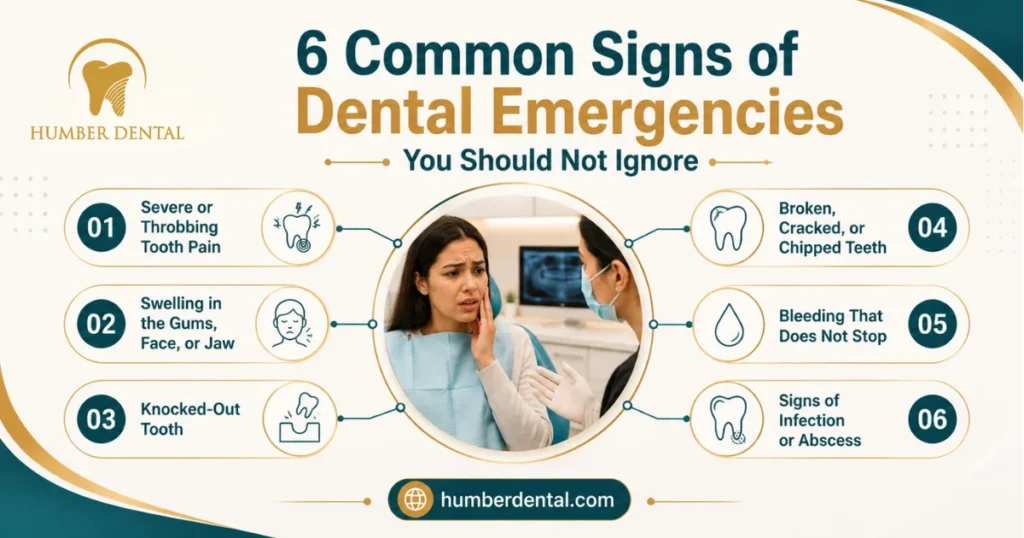
Knowing the most important dental emergency symptoms can help you decide when to seek urgent care.
1. Severe or Throbbing Tooth Pain
Pain is one of the clearest warning signs.
A mild toothache may sometimes improve temporarily, but severe or constant pain usually means something deeper is happening inside the tooth.
Pain that:
- keeps you awake at night
- worsens while chewing
- spreads into the jaw or ear
- becomes throbbing or intense
…may require immediate urgent dental care.
2. Swelling in the Gums, Face, or Jaw
Swelling should never be ignored.
Facial swelling often indicates infection, especially when combined with:
- pain
- fever
- difficulty swallowing
- bad taste in the mouth
These may be severe tooth infection symptoms that need emergency treatment quickly.
Dental infections can spread faster than many people realize.
3. Knocked-Out Tooth
A knocked-out tooth is one of the most time-sensitive dental emergencies.
The best chance of saving the tooth is usually within the first 30 minutes.
This is why immediate emergency dentist visit timing is extremely important after trauma or sports injuries.
4. Broken, Cracked, or Chipped Teeth
Not every chipped tooth is an emergency, but deeper cracks can expose nerves and lead to infection.
You should seek emergency dental services in Etobicoke if:
- pain is severe
- the tooth feels loose
- bleeding continues
- large portions of the tooth break off
Even small fractures can worsen quickly if untreated.
5. Bleeding That Does Not Stop
Bleeding after trauma, dental surgery, or injury should gradually slow down.
Continuous bleeding that does not improve may indicate:
- deeper injury
- gum damage
- trauma-related complications
This requires urgent evaluation.
6. Signs of Infection or Abscess
Dental abscesses are serious infections that often begin around the tooth root or gums.
Common dental emergency warning signs include:
- swelling
- pus or discharge
- fever
- severe pressure or throbbing pain
- foul taste in the mouth
Infections should never be ignored because they can spread beyond the mouth.
Can Dental Emergencies Wait Until Morning?
Some minor discomfort may wait briefly.
But severe pain, swelling, or infection usually should not.
A good rule is simple:
If the problem is:
- worsening quickly
- interfering with eating or sleeping
- causing swelling or bleeding
…it’s safer to contact a dentist immediately.
Delaying treatment often leads to:
- more pain
- more complicated treatment
- higher dental costs later
What Happens During an Emergency Dental Visit?
During an emergency dentist visit, the goal is to:
- relieve pain
- identify the cause
- prevent the problem from worsening
Treatment may involve:
- digital X-rays
- infection management
- fillings or bonding
- root canal treatment
- tooth stabilization or extraction
The dentist will explain the situation clearly and recommend the safest treatment approach.
Why Early Treatment Matters
Many dental emergencies become more difficult to treat when ignored.
For example:
- a small cavity may turn into infection
- a cracked tooth may split further
- swelling may spread deeper into surrounding tissues
The earlier you receive urgent dental care, the better the chances of protecting your natural teeth and avoiding more serious complications.
How To Reduce the Risk of Dental Emergencies
Some emergencies are unpredictable, but many are preventable with:
- regular dental checkups
- early cavity treatment
- proper oral hygiene
- sports mouth guards
- treatment for teeth grinding
Preventive care helps identify problems before they become emergencies.
Identify the Right Signs of a Dental Emergency and Act Quickly
Recognizing the right signs of dental emergency can help you act faster and avoid serious dental complications.
If you are experiencing:
- severe pain
- swelling
- infection symptoms
- trauma or bleeding
…it’s important not to ignore the problem or hope it improves on its own.
At Humber Dental, we provide same-day emergency appointments for patients needing fast and reliable emergency dental care in Etobicoke.
FAQs – Signs of Dental Emergency
Q1. What are the most common signs of dental emergency?
Common signs of dental emergency include severe tooth pain, swelling, bleeding, infection symptoms, broken teeth, and knocked-out teeth.
Q2. Is swelling in the face a dental emergency?
Yes, swelling in the face or jaw may be one of the serious dental emergency symptoms linked to infection and should be evaluated quickly.
Q3. When should I visit an emergency dentist?
You should schedule an emergency dentist visit if pain becomes severe, swelling develops, bleeding continues, or trauma damages the tooth.
Q4. Can a cracked tooth become a dental emergency?
Yes, a cracked or broken tooth can worsen quickly and may require urgent dental care if pain, sensitivity, or infection develops.
Q5. What happens if dental infections are ignored?
Untreated dental infections may spread deeper into surrounding tissues and become much more serious without emergency dental care.