
| With good care, dental implants often last decades, and many last a lifetime. The titanium post is built to be permanent, while the crown on top may need replacing after roughly 10 to 15 years of normal wear. Long-term success is commonly reported around 95 percent or higher. What shapes lifespan most is everyday care: brushing and flossing, regular check-ups, not smoking, and protecting against grinding. So a long dental implants life expectancy is less about luck and more about care. |
It’s a fair question to ask before spending real money: if I do this, how long will it actually last? Nobody wants a fix that needs redoing in a few years.
The short version is genuinely encouraging. Implants are one of the most durable things in dentistry. But “how long” has two answers, because an implant is really two pieces, and they age differently.
So, How Long Do Implants Last?
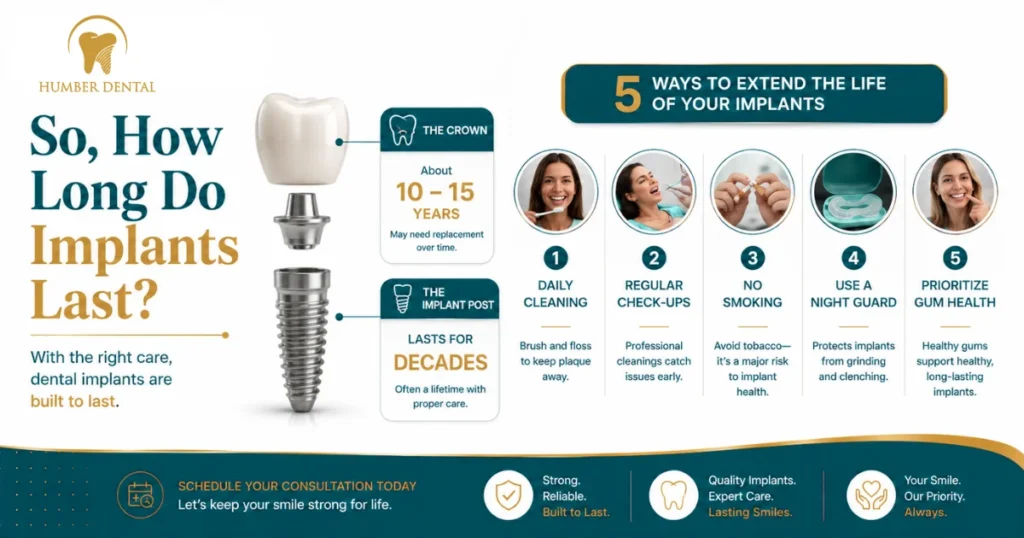
When people ask how long do implants last, the useful distinction is post versus crown. The implant post, the titanium root in your jaw, is designed to be permanent, and in many people it lasts a lifetime. The crown on top takes the daily wear of chewing, so it may need replacing after roughly 10 to 15 years, a bit like any well-used restoration.
| The part | Typical lifespan | Why |
|---|---|---|
| Implant post (the root) | Decades, often a lifetime | Titanium fuses with bone and stays put |
| Crown (the visible tooth) | About 10 to 15 years | Takes daily chewing wear over time |
| 🩺 Clinical Note: The number behind the reassurance Studies that follow implants over ten years commonly report success rates around 95 percent or higher. That reliability is a big part of why implants have become the go-to for a missing tooth. It isn’t a guarantee, and results vary from person to person, but as dental odds go, they’re excellent. |
What Shapes the Lifespan of Dental Implants
The lifespan of dental implants isn’t fixed at placement. It’s shaped over the years by a handful of everyday factors, most of which are in your hands:
- Daily Cleaning. Implants can’t decay, but the gum and bone around them can suffer without good brushing and flossing.
- Regular Check-Ups. Routine visits catch small issues early, long before they threaten the implant.
- Smoking. It reduces blood flow to the gums and is one of the biggest risks to long-term implant health.
- Grinding And Clenching. Heavy grinding stresses the crown and implant. A night guard protects against it.
- Gum Health. Healthy gums are the foundation. Gum disease is the main threat to an otherwise solid implant.
Tips to Help Yours Last
Getting the most from a long dental implants life expectancy comes down to treating an implant like a natural tooth, with one bonus: it can’t get a cavity, so gum care matters even more. Brush and floss daily, keep your check-ups, wear a night guard if you grind, and if you smoke, cutting back genuinely helps. None of this is dramatic. It’s just consistent.
Are They Worth It Long-Term?
For many people, this durability is the whole argument. Because implants tend to last so long and protect the jawbone, they often compare well over the years with options that need repeat work, even though they cost more up front. If you’d like to see how that upfront number breaks down, our dental implant cost guide walks through it.
Talk to a Dental Implant Dentist in Etobicoke
Wondering whether an implant is a smart long-term move for you? Book a consult with a dental implant dentist Etobicoke locals trust, and we’ll give you a straight read on your case, your options, and how to make an implant last.
📞 Call: (416) 745-4500
🌐 Online: humberdental.com
📍 Visit: 6100 Finch Ave W, Unit 205 & 206, Etobicoke, ON M9V 0A1
Evening and Saturday appointments available.
FAQs About Dental Implants Life
Q1. How long do dental implants last?
The titanium post is designed to be permanent and often lasts a lifetime, while the crown on top may need replacing after about 10 to 15 years of normal wear.
Q2. What is the success rate of dental implants?
Long-term studies commonly report success rates around 95 percent or higher over ten years. It’s not a guarantee, and individual results vary, but the odds are excellent.
Q3. What shortens the lifespan of dental implants?
Poor cleaning, gum disease, smoking, and untreated grinding are the main culprits. Most are preventable with good daily care and regular check-ups.
Q4. Do implants ever need replacing?
The post rarely does. The crown may, after years of chewing wear. Keeping up your hygiene and check-ups gives both parts the best chance of a long life.
Q5. Can dental implants fail years later?
It’s uncommon, but late failure can happen, usually from gum disease around the implant. Catching gum problems early at check-ups is the best protection.
Q6. How do I make my implant last longer?
Treat it like a natural tooth: brush and floss daily, keep check-ups, wear a night guard if you grind, and avoid smoking. Consistency matters more than anything fancy.