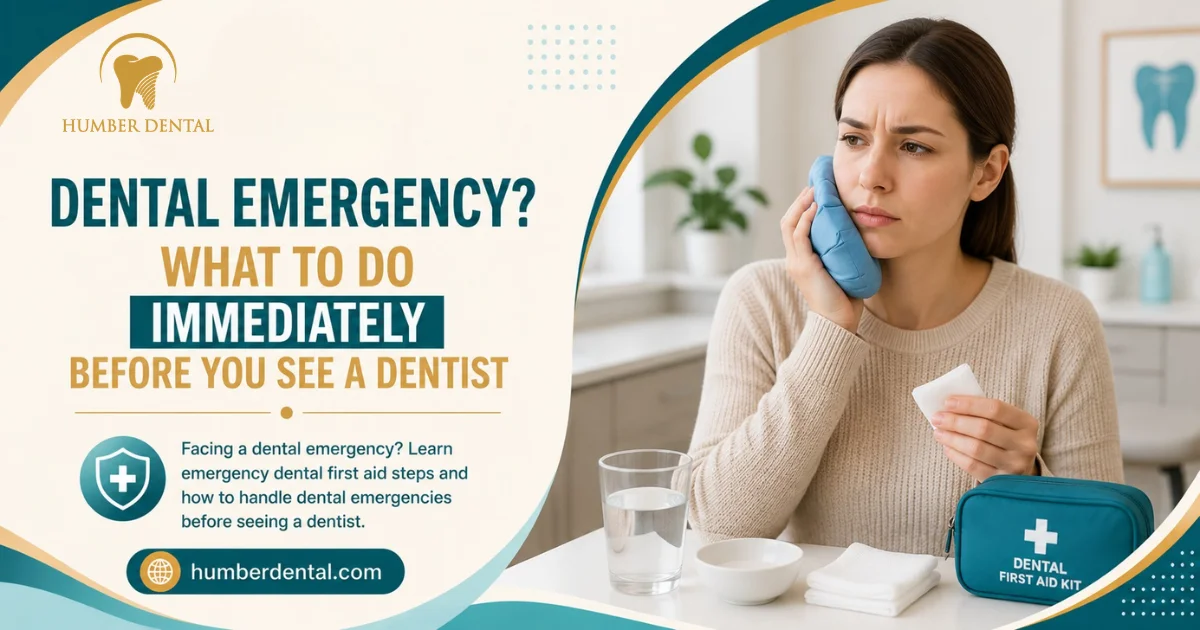
Dental emergencies always seem to happen at the worst possible time. A sudden toothache at night, a broken tooth during dinner, swelling before work, or a sports injury on the weekend can leave people panicking and unsure what to do next.
Knowing the right steps for dental emergencies can help reduce pain, protect your teeth, and prevent the situation from worsening before you reach the dentist.
In many cases, the first few minutes after a dental emergency matter more than people realize.
What Counts as a Dental Emergency?
Not every dental issue needs immediate treatment, but some symptoms should never be ignored.
You may need same-day emergency care if you experience:
- Severe tooth pain
- Swelling in the gums or face
- Broken or knocked-out teeth
- Bleeding that won’t stop
- Signs of infection
- Sudden trauma or injury
These problems can worsen quickly without proper treatment.
The First Rule: Stay Calm
Most people panic during dental emergencies, especially if there is bleeding, swelling, or sudden pain.
But staying calm helps you:
- Think clearly
- Protect the tooth properly
- Avoid making the injury worse
Many dental emergencies can be managed successfully when the right emergency dental first aid steps are followed early.
5 Dental Emergency Steps to Follow Immediately
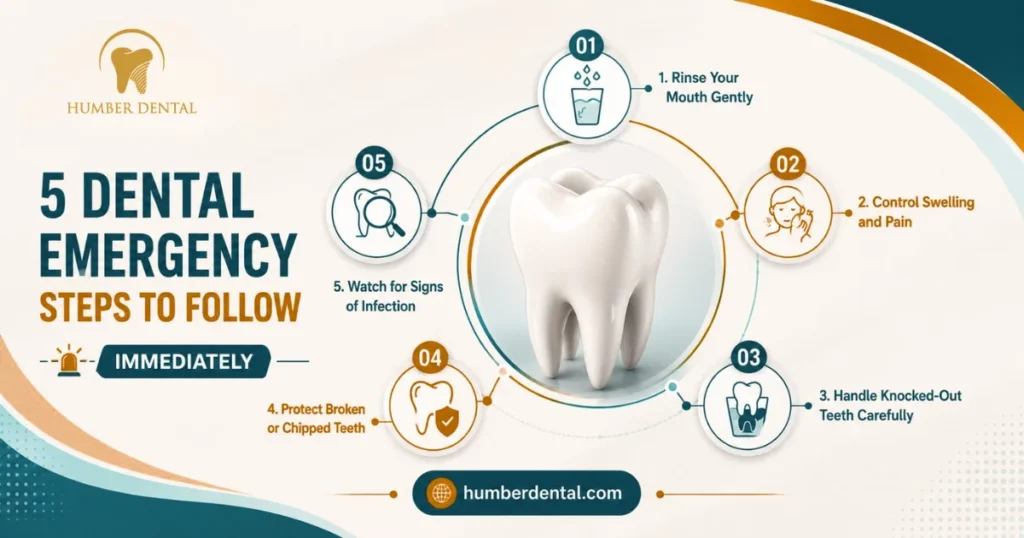
Different emergencies require different responses, but a few general rules apply in most situations.
1. Rinse Your Mouth Gently
Warm water helps clean the area and remove debris.
This is especially important after:
- Broken teeth
- Dental trauma
- Bleeding
- Food-related tooth injuries
Avoid aggressively brushing or poking the injured area.
2. Control Swelling and Pain
A cold compress on the outside of the face may help reduce swelling and discomfort temporarily.
For safer dental pain relief steps:
- Keep your head elevated
- Avoid chewing on the painful side
- Use over-the-counter pain medication if appropriate
Do not place aspirin directly on the gums, as this can irritate tissue further.
3. Handle Knocked-Out Teeth Carefully
If a tooth gets knocked out:
- Hold it by the crown only
- Avoid touching the root
- Keep it moist in milk or saliva
- Try to reach a dentist immediately
Fast action greatly improves the chances of saving the tooth.
4. Protect Broken or Chipped Teeth
If part of the tooth breaks:
- Save broken pieces if possible
- Avoid chewing on the area
- Cover sharp edges with dental wax if available
Even small fractures can worsen quickly without treatment.
5. Watch for Signs of Infection
Some symptoms require faster emergency dental treatment than others.
You should seek urgent care immediately if you notice:
- Swelling spreading into the face
- Fever
- Difficulty swallowing
- Pus or unusual taste
- Severe throbbing pain
These may be signs of infection spreading deeper into the tooth or surrounding tissues.
What You Should NOT Do During a Dental Emergency
Knowing what to avoid is just as important as knowing what to do.
Avoid:
- Ignoring severe swelling
- Using extremely hot or cold foods
- Delaying treatment for severe pain
- Touching exposed tooth roots repeatedly
- Using sharp objects around damaged teeth
These mistakes can worsen the condition and make treatment more difficult later.
Can You Wait Until the Next Day?
This depends on the symptoms.
Mild sensitivity or very small chips may sometimes wait briefly.
But severe pain, swelling, bleeding, or trauma should never be ignored.
In many cases, delaying treatment causes:
- Infection spread
- Increased pain
- More expensive procedures later
- Greater risk of tooth loss
When in doubt, it’s safer to contact an emergency dentist early.
What Happens Once You Reach the Dentist?
An emergency dental visit usually focuses on:
- Relieving pain quickly
- Identifying the cause
- Stabilizing the problem
- Preventing complications
Treatment may include:
- X-rays
- Temporary restorations
- Infection management
- Root canal treatment
- Tooth repair or extraction
The goal is to stop the issue from becoming worse while protecting your long-term oral health.
Why Fast Action Matters
One of the biggest mistakes patients make is assuming dental pain will simply go away on its own.
Unfortunately, many dental emergencies worsen quickly when ignored.
The earlier you receive emergency dental services in Etobicoke, the better the chances of:
- Saving the tooth
- Reducing pain
- Preventing infection
- Avoiding more complex treatment later
How To Reduce Future Dental Emergencies
Some emergencies are unavoidable, but many can be prevented with:
- Regular dental checkups
- Early cavity treatment
- Wearing sports mouth guards
- Treating grinding or clenching habits
- Maintaining good oral hygiene
Preventive care is almost always easier than emergency treatment.
Know the Right Steps to Deal with a Dental Emergency at Home
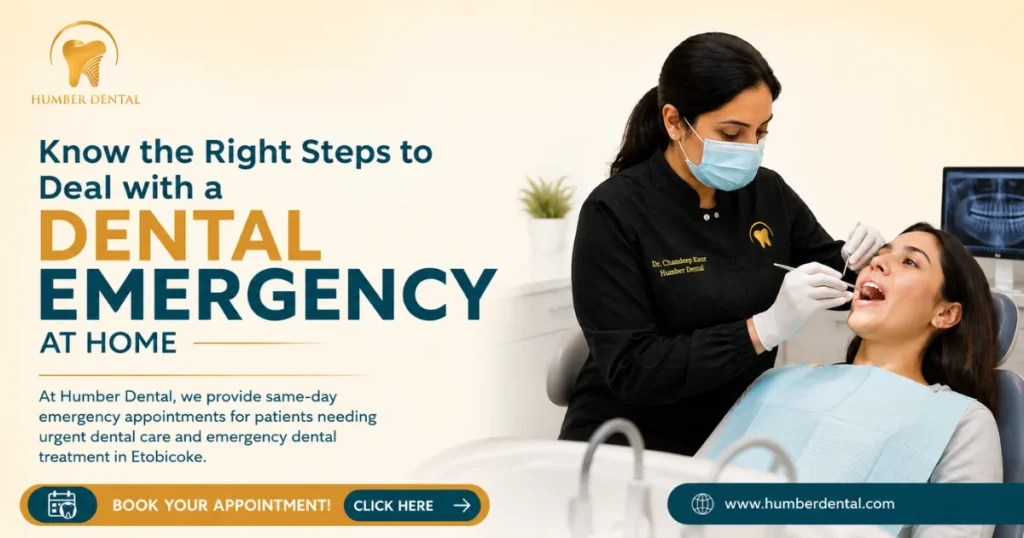
Knowing the right dental emergency steps can help you stay calmer and protect your teeth during stressful situations.
The most important things to remember are:
- Stay calm
- Reduce swelling and pain safely
- Protect the damaged tooth
- Seek professional care quickly
At Humber Dental, we provide same-day emergency appointments for patients needing urgent dental care and emergency dental treatment in Etobicoke.
FAQs – Dental Emergency Steps
Q1. What should I do first during a dental emergency?
The first dental emergency steps include staying calm, rinsing your mouth gently, reducing swelling, and contacting a dentist as soon as possible.
Q2. How do I handle a knocked-out tooth before seeing a dentist?
To handle a dental emergency involving a knocked-out tooth, keep the tooth moist, avoid touching the root, and seek emergency dental treatment immediately.
Q3. What helps with dental pain before emergency treatment?
Cold compresses, warm salt water rinses, and keeping the head elevated may help temporarily with dental pain relief steps before seeing a dentist.
Q4. When should I seek same-day emergency dental care?
You should seek same-day emergency dental care if you have swelling, severe pain, bleeding, infection symptoms, or dental trauma.
Q5. Can delaying dental emergencies make the problem worse?
Yes, delaying emergency dental treatment can increase infection risk, worsen pain, and lead to more complicated dental procedures later.