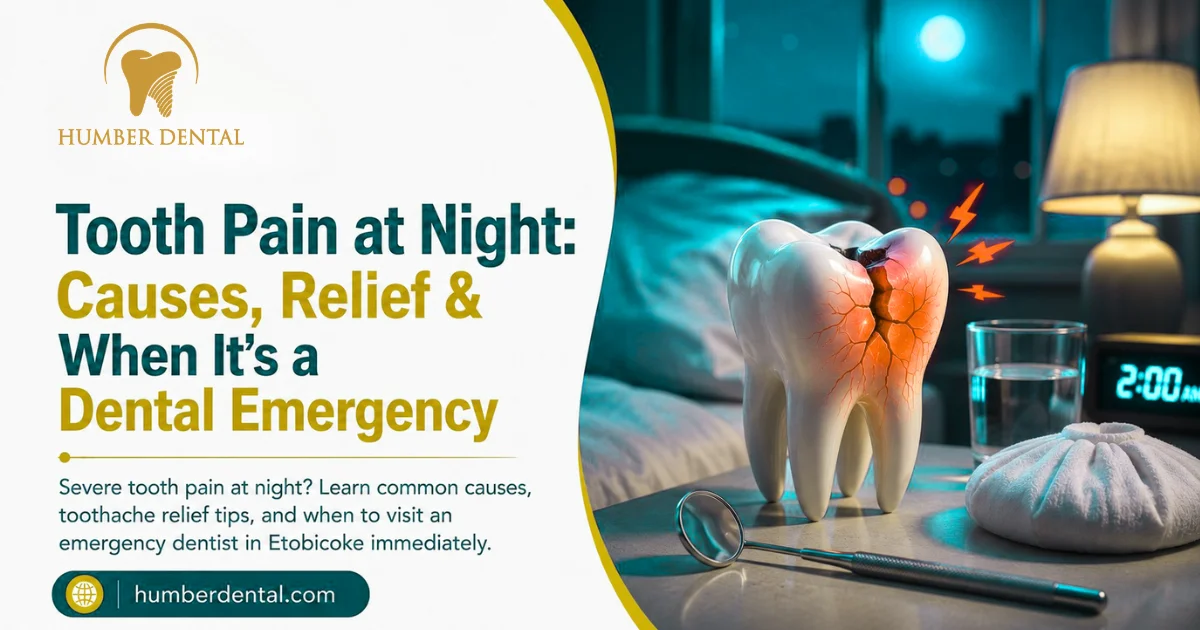
Few things feel worse than lying down at night and suddenly realizing your tooth pain is getting stronger instead of better.
Many people notice that tooth pain at night feels more intense, more constant, and harder to ignore once everything becomes quiet. It can make sleeping difficult and leave you wondering whether the problem can wait until morning.
Sometimes it can. Sometimes it shouldn’t.
Understanding what causes nighttime tooth pain and knowing when to seek emergency dental care can help you avoid bigger dental problems later.
Why Does Tooth Pain Feel Worse at Night?
This is something many patients ask during emergency visits.
One reason is that lying down increases blood flow and pressure around inflamed areas in the mouth. Without daytime distractions, the pain also becomes much more noticeable at night.
In many cases, severe tooth pain at night causes include:
- Tooth infection
- Deep cavities
- Cracked teeth
- Gum infection
- Exposed tooth nerves
- Teeth grinding or clenching
Sometimes the pain may start suddenly. Other times, it builds gradually over days or weeks before becoming unbearable at night.
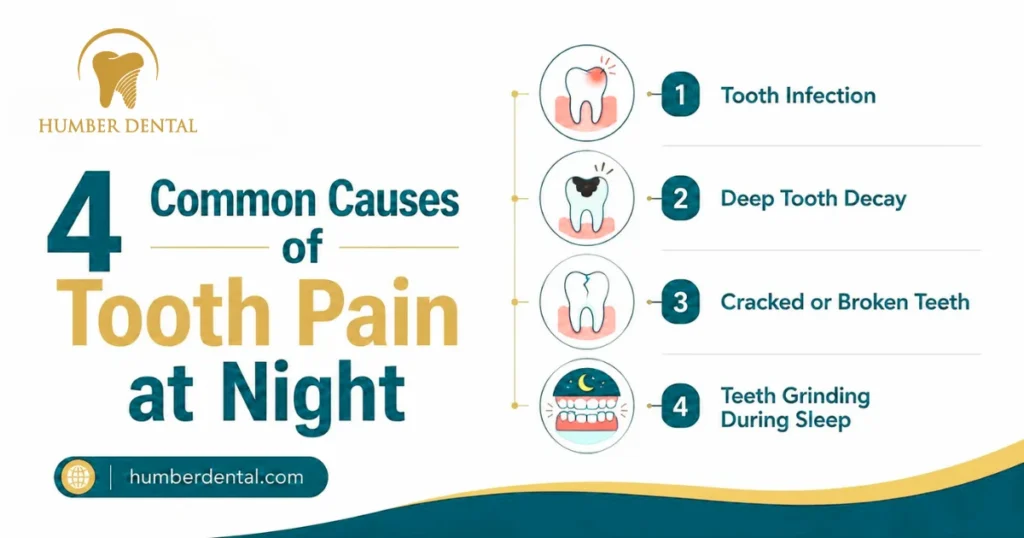
4 Common Causes of Tooth Pain at Night
Tooth pain is not always caused by the same problem.
1. Tooth Infection
An infected tooth is one of the most common reasons people need urgent dental care.
Signs may include:
- Throbbing pain
- Swelling around the gums
- Sensitivity to pressure
- Pain spreading into the jaw or ear
Infections often worsen at night because inflammation increases pressure inside the tooth.
2. Deep Tooth Decay
Cavities that reach deeper layers of the tooth can irritate the nerve and cause pain that becomes more intense after eating or lying down.
This type of pain may:
- Come and go initially
- Become sharp suddenly
- Increase with hot or cold foods
3. Cracked or Broken Teeth
Small cracks are not always visible, but they can expose sensitive areas inside the tooth.
Patients trying to fix broken tooth problems often ignore small fractures until nighttime pain starts becoming difficult to tolerate.
4. Teeth Grinding During Sleep
Many people grind or clench their teeth at night without realizing it.
This can lead to:
- Jaw soreness
- Tooth sensitivity
- Pressure-related pain
- Morning headaches
Over time, grinding can wear down enamel and expose sensitive parts of the teeth.
How To Get Toothache Relief at Night
Temporary relief may help reduce discomfort until you can see a dentist.
For safer tooth pain relief at night, you can:
- Rinse gently with warm salt water
- Use a cold compress on the outside of the face
- Avoid chewing on the painful side
- Keep your head elevated while resting
- Take over-the-counter pain medication if appropriate
What you should avoid:
- Placing aspirin directly on the gums
- Using extremely hot or cold foods
- Ignoring swelling or worsening pain
These steps may help temporarily, but they do not replace professional dental treatment.
When Tooth Pain Becomes a Dental Emergency
Not all toothaches require immediate emergency treatment.
But some definitely do.
You should seek emergency dental treatment if your tooth pain is combined with:
- Swelling in the gums or face
- Fever
- Difficulty swallowing
- Severe throbbing pain
- Pus or unusual taste in the mouth
- Pain that keeps getting worse
These may be signs of infection spreading deeper into the tooth or surrounding tissue.
Can Tooth Pain Go Away on Its Own?
Sometimes pain may temporarily reduce, but that does not always mean the problem is gone.
In fact, when a tooth nerve begins dying from infection, the pain may briefly improve before returning more severely later.
This is why ongoing tooth pain at night should never be ignored for too long.
What Happens During an Emergency Dental Visit?
An emergency dentist in Etobicoke will first identify the cause of the pain before recommending treatment.
This may include:
- Dental examination
- X-rays
- Infection evaluation
- Pain management
Depending on the problem, treatment may involve:
- Fillings
- Root canal therapy
- Tooth extraction
- Infection treatment
The goal is always to relieve pain and stop the condition from worsening.
Why Acting Early Matters
One of the biggest mistakes people make is waiting until the pain becomes unbearable.
The earlier you receive emergency dental care, the easier it is to:
- Treat infection
- Save the tooth
- Reduce complications
- Avoid more extensive treatment later
Small dental problems usually become more expensive and painful when ignored.
How To Prevent Future Nighttime Tooth Pain
Regular dental checkups help identify issues before they become emergencies.
Preventive care can help reduce:
- Untreated cavities
- Gum disease
- Tooth fractures
- Infection risk
For patients who grind their teeth, custom night guards may also help reduce nighttime discomfort and pressure.
What To Do When Tooth Pain at Night Arrives
Tooth pain at night is your body’s way of telling you something is wrong.
Sometimes the issue is minor. Sometimes it requires immediate attention.
If the pain becomes severe, persistent, or associated with swelling, it’s important to seek professional dental care as soon as possible.
At Humber Dental, we provide same-day emergency appointments for patients experiencing sudden or severe dental pain.
FAQs – Tooth Pain at Night
Q1. Why does tooth pain feel worse at night?
Tooth pain at night often feels worse because lying down increases blood flow and pressure around inflamed or infected areas inside the tooth.
Q2. What helps with toothache relief at night?
Toothache relief at night may include salt water rinses, cold compresses, keeping your head elevated, and avoiding pressure on the painful tooth.
Q3. Can tooth pain mean infection?
Yes, severe tooth pain at night combined with swelling, fever, or throbbing discomfort may be one of the common dental infection symptoms.
Q4. When should I see an emergency dentist for tooth pain?
You should see an emergency dentist in Etobicoke if tooth pain becomes severe, keeps worsening, or is associated with swelling or signs of infection.
Q5. Can emergency dental care stop severe tooth pain quickly?
Yes, emergency dental care focuses on identifying the cause of pain and providing treatment to reduce discomfort and prevent further complications.